 eCommerce
 Sistemi di abbonamento
 Chatbot
 Corsi online
 Prenotazione online
 Guida turistica
 Eventi
 Creatori di contenuti
 Consegna locale e Ritiro in negozio
 Giornale
 Radio
Radio Scuole e università
 Fede
Fede Organizzazioni
 Ristorante
 Alimentari
 Costruisci l'app su misura
 Comunicazione con i dipendenti

 APP BUILDER SENZA CODICE
 TECNOLOGIA
 PERCHÉ GOODBARBER?
 Design
 RISORSE DEL PRODOTTO
 TEMI
TEMI
 RIVENDITORI DI APP
 SCOPRI
Ruba questa idea: un quiz sui film dell'estate creato con l'IA che il tuo pubblico condividerà davvero
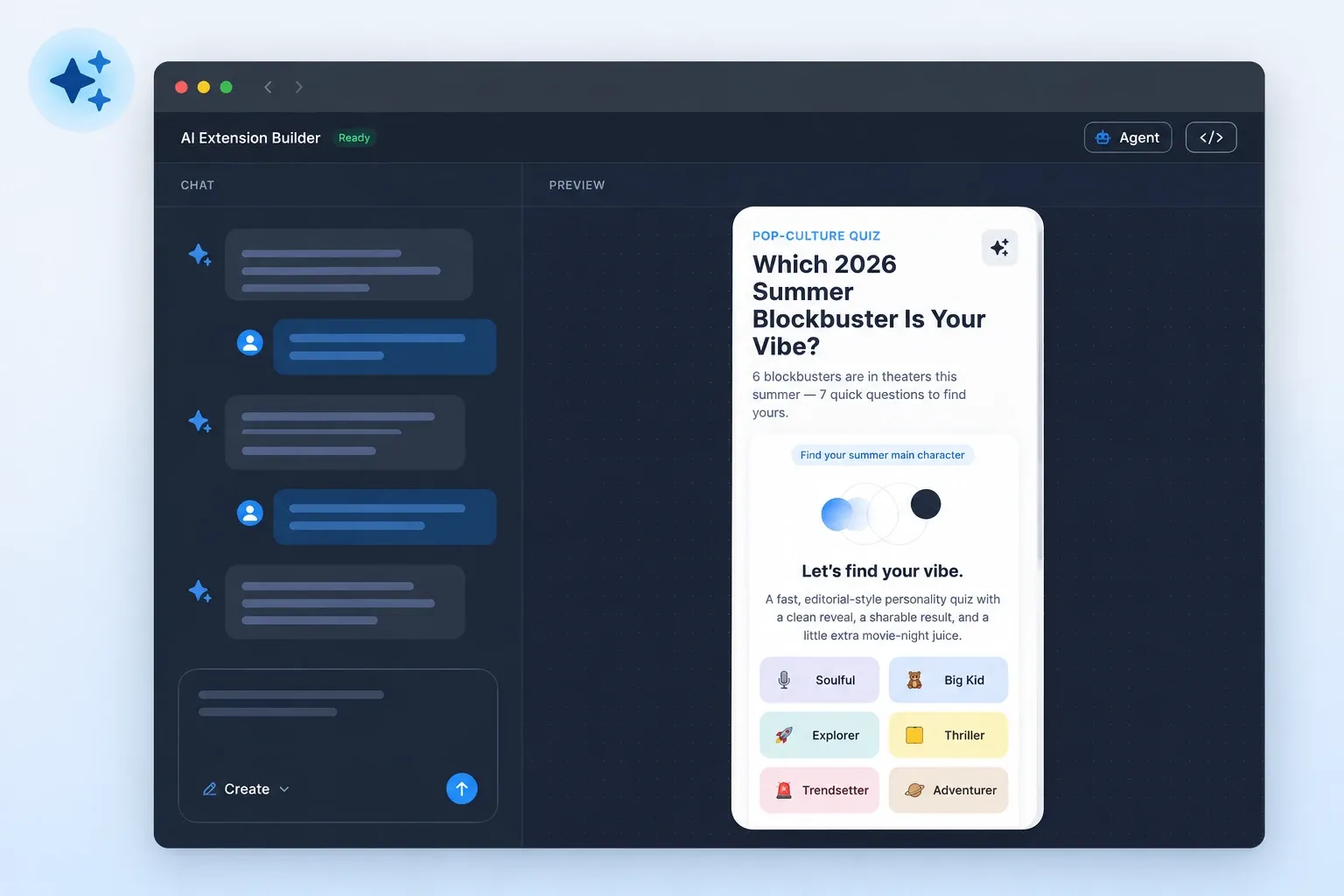
Sei blockbuster si contendono l'attenzione di tutti quest'estate. Ecco come trasformarla in engagement dentro la tua app: un quiz della personalità — « Which 2026 Summer Blockbuster Is Your Vibe? » — creato interamente descrivendolo all'AI Extension Builder di GoodBarber. Un prompt in ingresso, una sezione pronta da pubblicare in uscita. Questo articolo ti dà tutto: cosa fa il quiz, perché il formato funziona così bene per le app di contenuti, e il prompt esatto che abbiamo usato — scritto perché tu possa rubarlo, personalizzarlo e farlo tuo.

Il quiz
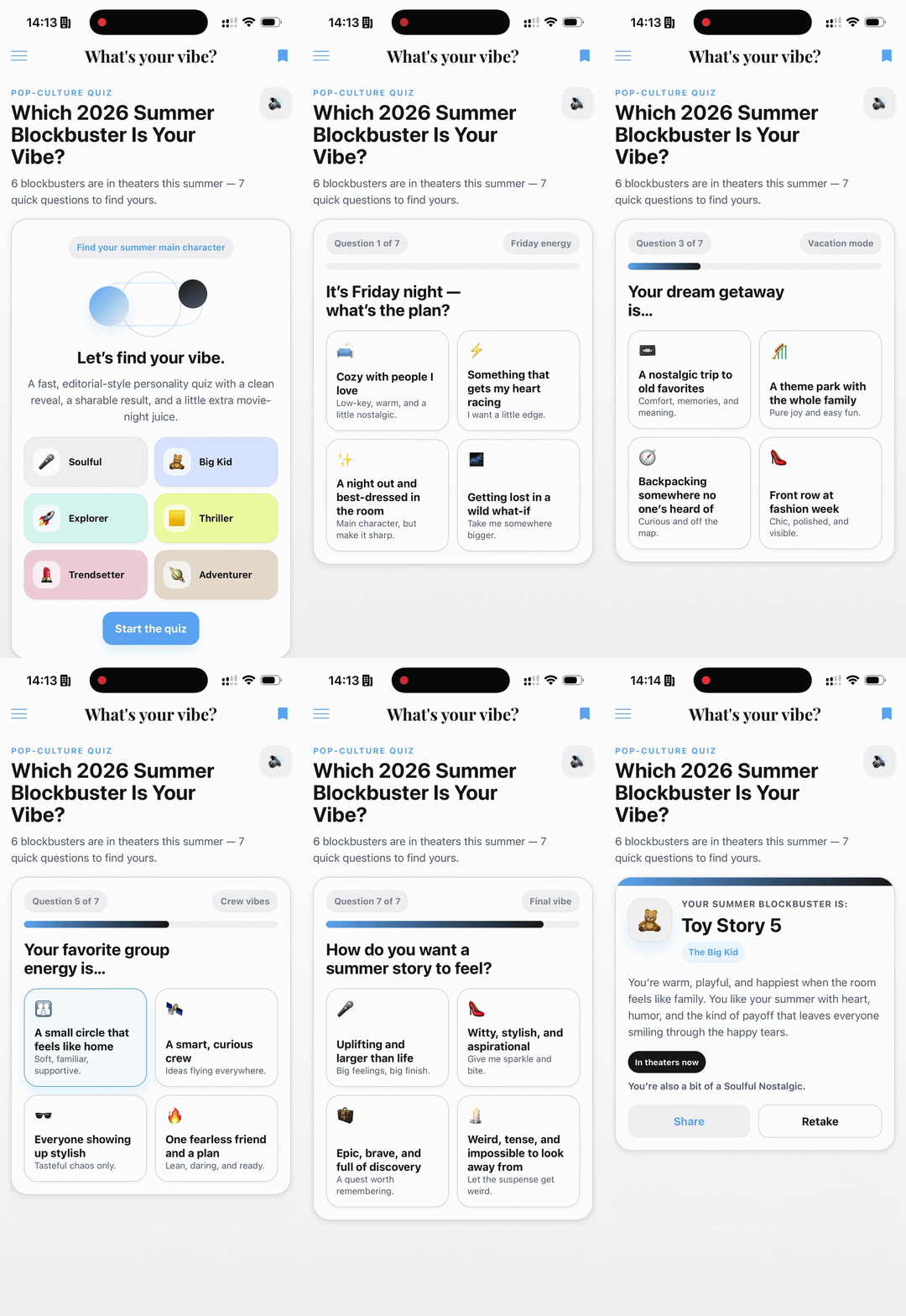
Tutto inizia da una schermata di intro decisa: sei tessere-mood colorate — colori e icone originali, niente locandine, niente materiali degli studios — e una promessa: 6 blockbuster sono al cinema quest'estate — 7 domande rapide per trovare il tuo.
Poi sette domande, e nessuna parla di cinema. È il segreto di un quiz della personalità: parla di te. «È venerdì sera — che si fa?» «Scegli la tua colonna sonora dell'estate.» Quattro risposte toccabili ogni volta, una barra di avanzamento, transizioni fluide, un breve «calcolo della tua vibe…» — poi la rivelazione: il tuo film, il tuo persona («The Explorer», «The Trendsetter», «The Big Kid»…), una descrizione personalizzata nel colore di quel film, più una riga sul secondo classificato, perché siamo tutti un po' due cose insieme.
Due pulsanti chiudono il cerchio. Condividi copia una frase pronta da postare — «I got Project Hail Mary — The Explorer! Which 2026 summer blockbuster is your vibe? 🎬» — e Rifai il quiz, perché metà del divertimento è rispondere come farebbe il tuo migliore amico.
Perché questo formato si merita un posto nella tua app
I quiz della personalità sono il formato di punta dell'editoria pop per una ragione. Si capiscono all'istante, sono stranamente irresistibili e nascono per essere condivisi — una card di risultato è uno screenshot in attesa di esistere, e ogni condivisione è la tua app che viaggia verso qualcuno di nuovo.
E siccome è una sezione dentro la tua app — non un embed da un sito di quiz — eredita tutto ciò che la tua app ha già: il tuo design system, la tua navigazione, il tuo pubblico. L'engagement avviene nel tuo prodotto, non in quello di qualcun altro.
Il prompt — rubalo
Non c'è una riga di codice dietro questo quiz: solo un brief scritto, affidato all'AI Extension Builder. Eccolo — lungo di proposito (il flusso, le regole, le garanzie), nell'inglese originale, leggermente riformattato per la lettura:
Se lo adatti, quattro parti fanno quasi tutto il lavoro — tienile:
1. Chiedi garanzie, non solo funzionalità. Il brief non spiega mai come programmare il punteggio. Dichiara ciò che deve sempre essere vero: un ordine di spareggio fisso perché non ci sia mai un risultato vuoto, ognuno dei sei risultati davvero raggiungibile, tap rapidi che non rompono il flusso. Descrivi gli invarianti; il builder scrive il codice.
2. Dichiara il flusso, schermata per schermata. Intro, domande, rivelazione, risultato: il prompt nomina ogni schermata e cosa deve contenere. Non stai scrivendo codice — stai scrivendo lo storyboard, e il builder ci costruisce sopra.
3. Progetta per lo screenshot. «Una card di risultato pulita, pronta per lo screenshot» è un'istruzione, non un caso. Se vuoi condivisioni, chiedi condivisibilità.
4. Codifica le regole legali. Titoli veri, citati editorialmente — e un divieto esplicito di loghi, locandine, immagini e personaggi. Tutti i visual originali. Il prompt è il punto in cui si decide «contenuto editoriale da fan, non violazione».
Confessione: Claude mi ha aiutato a mettere in ordine le idee e a scrivere questo prompt. Fallo anche tu — descrivere ciò che vuoi, si scopre, è un'altra cosa in cui l'IA aiuta parecchio.
Fallo tuo
I film sono stagionali; la macchina no. Sostituisci sei blockbuster con sei mete di viaggio, sei ricette, sei stili di allenamento, sei vini, sei quartieri — la meccanica (domande di mood, risposte pesate, rivelazione, condivisione) non cambia, e nemmeno lo scheletro del prompt. È questo che il prompt-to-section cambia per i formati editoriali: diventano qualcosa che lanci per un momento, non qualcosa che pianifichi con un trimestre di anticipo. Un quiz per le uscite dell'estate. Un altro per la stagione dei premi. Ritirato quando il momento passa, rigenerato quando arriva il prossimo.
Un consiglio se vai sullo stagionale: scrivi prima i sei risultati — nome del persona, due righe di atmosfera, colore d'accento — prima di toccare le domande. Le domande sono facili quando i persona sono nitidi; sei persona nitidi sono l'intero quiz.
Per andare oltre
- Un gioco con classifica nella tua app, senza codice — il cugino più selvaggio di questo build.
- We let an AI write code inside our no-code platform — generating it was the easy part — l'ingegneria che rende sicure da pubblicare le sezioni generate, su dev.to.
- L'AI Extension Builder — crea sezioni su misura descrivendole. In beta, aperto a tutti.
Tocca a te
Porta all'Extension Builder la funzionalità che nessun catalogo ti offrirà mai — un quiz per la tua nicchia, un calcolatore per il tuo servizio, un conto alla rovescia per la tua stagione. Descrivila come faresti un brief a un collega: il flusso, le regole, le garanzie. Se si può descrivere, può essere una sezione della tua app già questo pomeriggio.
In breve
Devo saper programmare per creare questo quiz? No. Tutto ciò che è descritto qui — flusso, punteggio, animazioni, condivisione — è uscito dal brief scritto qui sopra, affidato all'AI Extension Builder di GoodBarber. Scrivere un buon prompt è product thinking, non programmazione.
Posso citare titoli veri di film nella mia app? I riferimenti editoriali — come una rivista che parla delle uscite dell'estate — sono prassi standard dei contenuti da fan, e il prompt vieta tutto il resto: niente loghi, locandine, immagini o personaggi. Per il tuo caso specifico, consulta il tuo legale.
Il quiz si adatterà al look della mia app? Sì. La sezione viene generata dentro la tua app GoodBarber e tematizzata con i tuoi colori — atterra nel tuo design system, non accanto.


